
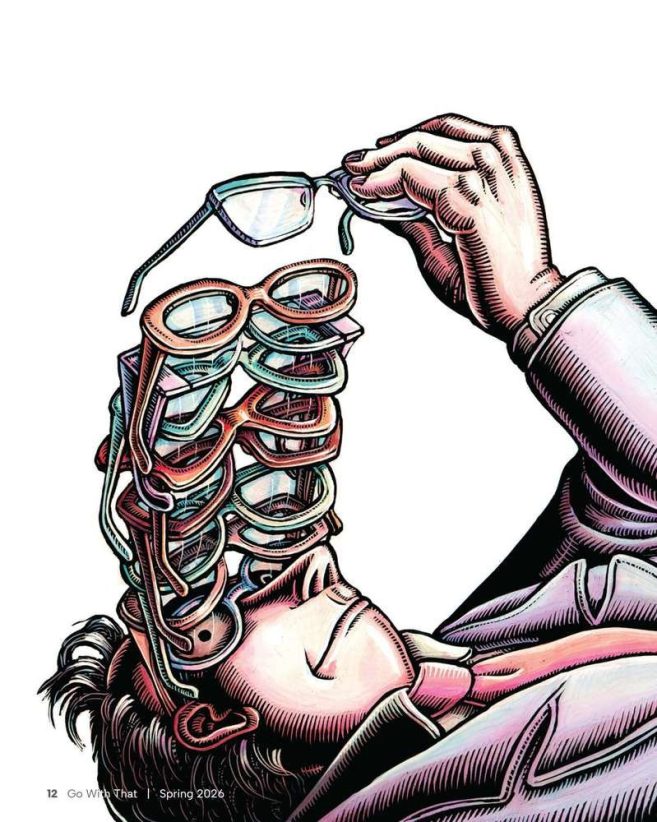
From Spring 2026 of EMDRIA’s Go With That Magazine (note spelling American as in original)
By Mark Brayne, MA
A quick note on terminology: the Levels One to Four in this article are the four levels of formative experience at the heart of the ai-EMDR clinical model — not to be confused with our Level One and Level Two workshops, which now carry those names.
Eye Movement Desensitization and Reprocessing (EMDR) therapy stands or falls on pacing and timing. Dr. Francine Shapiro’s original contribution was not only the discovery that bilateral stimulation facilitates adaptive information processing (AIP), but the recognition that processing must occur within a workable range of nervous system activation (Shapiro, 2018). When trauma is discrete and occurs later in life, that range is often relatively stable. With more complex presentations rooted in developmental experience, the system’s capacity is much less predictable. Activation can escalate into overwhelm or, equally, collapse into compliance, intellectualization, looping, or emotional shutdown. The client may remain in therapy; yet adaptive processing continues to stutter and stall.
This article examines how, especially, but not only, in developmental and complex presentations, EMDR therapy can be paced more effectively when case conceptualization, target selection, activation, and session structure are viewed and managed through an attachment-informed lens. The standard eight-phase protocol remains intact. What shifts is the clinician’s orientation to what is being treated. When attachment-organized material is accurately identified, pacing becomes less about holding back and more about knowing where to go.
Even with intense, identifiable trauma, symptoms typically constellate more around attachment-informed survival strategies than they do around isolated events. If EMDR therapy proceeds as though the disturbance is primarily event-based, interventions may remain at the network’s surface. When clinicians recognize and directly target attachment organization, processing is more likely to engage and safely hold the specific memory node (Shapiro, 2018), which is driving present distress.
This position aligns with broader psychotherapy research, emphasizing the centrality of attachment and relational awareness. Wallin (2007) argues that clinicians must attend to how attachment patterns shape both symptom formation and the therapeutic relationship itself. In the framework described here, however, attachment awareness is not primarily focused on explicitly restructuring a client’s attachment style within the therapeutic relationship but rather on case conceptualization and target selection (Bowlby, 1969/1982; 1988).
From Event-centered to Attachment-organized EMDR
EMDR therapy training has traditionally emphasized the disturbing event: the accident, the assault, the car crash, the explicit moment of terror or overwhelm. In many cases, this focus remains appropriate and effective. What is, however, often at least as important is not the event in isolation but how this individual nervous system learned in its formative years to organize and metabolize experience. The clinical question shifts from “What happened?” to “How, where, when, with (or without) whom, did this client learn to respond to what happened?” Targeting moves from the moment of rupture to the quality, or absence, of repair.
This distinction is reflected in the International Classification of Diseases, 11th Revision (ICD-11, World Health Organization, 2018), which differentiates post-traumatic stress disorder (PTSD) from complex PTSD (C-PTSD). In addition to the core PTSD symptoms of re-experiencing, avoidance, and persistent threat, C-PTSD includes disturbances in the self-organization domains of affect dysregulation, negative self-concept, and relational disturbance.
In EMDR therapy, which prioritizes attachment awareness, survival responses can be conceptualized beyond the familiar Flight-Fight-Freeze triad to include Flop, Friend, and Fawn, echoing established descriptions in trauma research of the defensive or “survival cascade” (Schauer & Elbert, 2010; Kozlowska et al., 2015). Manifesting as mobilized defensive states, inhibition under perceived danger, dorsal vagal shutdown (Porges, 2011), proximity-seeking under threat (Taylor et al., 2000), or appeasement and compliance behaviors (Walker, 2013), these autonomic shifts can be understood as attachment-based attempts to restore safety through connection and attachment (Brayne, 2024). The urge to ‘Friend’ might be understood as proactive attachment-seeking to engage the other and restore safety, whereas ‘Fawn’ involves appeasement through self-suppression. As another’s needs are prioritized, both lead to a loss of agency, to compulsive caretaking, excessive emotional responsibility, and trauma-bonded relational dynamics (Dutton & Painter, 1993).
The rules of early survival grammar go on to drive adult symptoms, such as chronic anxiety, irritability, indecision, emotional distance, or depressive withdrawal. Recognizing these patterns allows clinicians to use relationally attuned targeting, interweaving, and pacing decisions to update a client’s foundational survival logic rather than focusing primarily on symptom reduction.
Although empirical evaluation of this framework is still in development, emerging qualitative and case-based findings suggest the value of EMDR in conceptualizing a client’s story across four sequential levels of childhood experience and EMDR targeting (Ramsey-Wade et al., in press).
Level One refers to an external experience or event located in space and time, the bad thing that happened on the outside, and consistent not only with Criterion A of the PTSD diagnosis in the Diagnostic and Statistical Manual of Mental Disorders, Fifth Edition, but also allowing for less obviously dramatic moments of existential activation for the client as an adult or child. Level Two captures the internal meaning, shaped by prior attachment experience, that is made by the nervous system in response to such events (Maté & Maté, 2022). Level Three identifies and targets parental or authority-based introjects (Klein, 1946) that still hold the beliefs, emotional responses, and relational expectations observed, felt, and internalized during childhood. Level Four extends to intergenerational or transgenerational patterns: survival strategies, loyalties, identity narratives, and fears transmitted across family systems, culture, or collective history.
Conceptualizing distress across these levels does not replace the Standard EMDR Protocol. Rather, it offers a clear lens through which to refine Phase 1 case conceptualization and Phase 3 target identification. In developmental trauma, the external event often serves as an entry point into material that has long organized the client’s internal world. Effective pacing depends on recognizing which level is driving present activation and adjusting depth and containment accordingly.
Two Tracks of Processing
To navigate this, clinicians might conceptualize Phase 3 targeting and Phase 4 processing across what in the ai-EMDR framework (Ramsey-Wade et al., in press) are understood as two parallel tracks. One reflects external trauma-informed experience and events, and the other the internal, attachment-informed meaning made of external experience by the client’s evolutionary and survival-informed nervous system. This understanding also reflects established models that differentiate traumatic memory from relational schema (Wallin, 2007) and bottom-up networks from top-down relational meaning systems (Siegel, 2012).
Track One addresses what occurred and how it persists as unprocessed memory. Track Two addresses what the event confirmed within the client’s attachment system, including beliefs about worth, responsibility, danger, dependency, and the expectation of repair. In single-incident trauma, Track One may predominate. In developmental trauma, Track Two frequently organizes the presentation.
For pacing, this distinction is decisive. Focusing primarily on Track One, where the trauma response is primarily informed by Track Two meaning-making, may lead to overwhelm, dissociation, or procedural compliance without meaningful integration. Staying too long in stabilization without activating the attachment-organized network may produce safety, but not resolution. Attachment-organized pacing is therefore neither excessive caution nor inappropriate acceleration. It is a disciplined approach that addresses the structures most responsible for continuing distress.
Phases 1 and 2 Case Conceptualization and Target Identification as Attachment Mapping
In complex trauma, Phase 1 History Taking offers space for more than the gathering of biographical data. The clinician is invited to pay particular attention to behavioral and relational patterns that emerge in the present, including within the therapeutic relationship itself: anticipating criticism, apologizing pre-emptively, intellectualizing affect, shifting rapidly into caretaking, becoming compliant, or going blank. When Phase 1 conceptualization captures these patterns clearly, subsequent target selection and pacing are more likely to engage the network that sustains the client’s difficulties, rather than its historical surface.
Standard EMDR therapy preparation commonly includes Safe or Calm Place work, stabilization skills, and psychoeducation. These remain clinically important. However, for clients with complex attachment histories, a solitary Safe or Calm Place can be paradoxical. If isolation itself was historically associated with fear or neglect, the instruction to step away from the story into a place of calm may inadvertently further activate the original wound rather than soothe it.
An attachment-organized approach expands preparation to include relational and imaginal resourcing. Parnell’s attachment-focused EMDR (Parnell, 2013) offers a structured method through the identification and installation of Imaginal Nurturing Figures, Protector Figures, and a Wise Figure, each strengthened with brief sets of bilateral stimulation. The therapeutic value here lies not primarily in the imagery alone, but in its effect on the nervous system’s expectations. When nurturance, protection, steadiness, and perspective are activated in imaginal form and paired with bilateral stimulation, qualities such as kindness, warmth, firmness, strength, and wisdom—often insufficiently available during formative years—are deliberately and consciously brought online.
Preparation and pacing do more than reduce anxiety; they build the therapeutic container and relational capacity. When clinicians install—or “tap in” (Parnell, 2013)—both self-soothing and relational safety, they gain the room to engage attachment targets without transgressing the client’s workable edge, or “window of tolerance” (Siegel, 1999). Preparation functions both as a diagnostic tool and as nervous system education. Brief and focused sets of bilateral stimulation, present-tense check-ins, and predictable structure already coach the client’s nervous system on how EMDR will work when we are in processing mode in Phase 4, with a trauma-informed approach to activation, metabolization, desensitization, and integration. For individuals whose early activation did not lead to repair, this learning is foundational, holding the frame for distress to move toward resolution rather than abandonment.
Phase 3 Target Selection in Complex Trauma and the Grammar of the Bridge
Target selection determines whether EMDR therapy addresses the root disturbance or remains on the symptomatic surface. While event-centered work frequently asks, “What is the worst part?,” attachment-organized EMDR focuses on how the nervous system learned the enacted survival strategy. Present distress serves as the direct entry point to the root attachment experiences driving continued dysfunction.
Differentiating across the four levels of formative experience helps reduce the risk of working at the wrong depth. Some clients can process an extensive catalog of events while never contacting the attachment-organized disturbance that sustains their present symptoms. Others can recount history in vivid narrative detail, yet remain emotionally distant from it. Still others can identify negative cognitions all too rapidly because these beliefs are well rehearsed and sit near the cognitive surface.
In such cases, focused bridging from a present-day trigger to the earliest experiential landing place—rather than inviting a cognitive search for the “first time you can remember”—reliably opens access to the network organizing the distress. The clinical shift is subtle, but significant: less cognitive scaffolding and a more precise activation of the embodied memory node. Open invitations to “float back,” perhaps with the added encouragement to identify “the earliest time you recall that experience,” can encourage cognitive searching, narrative construction, or subtle defensiveness. It is an approach that can facilitate dissociation rather than deepen contact with the relevant network.
Finding the appropriate rhythm and pace for attachment-organized work benefits in important ways from what may be termed clean language. The term is used here less linguistically than clinically, resonating with principles developed by David Grove and later articulated by practitioners such as Walker (2017). Clean Language emphasizes minimal imposition, precise wording, and the avoidance of therapist-generated content that could shape the client’s experience. In EMDR therapy, this translates into clear, decisive, and economical instructions that reduce ambiguity and limit opportunities for cognitive drift.
Identifying with clients a precise moment of distress activation in space and time in their current life, the clinician first ensures embodied activation and then delivers a concise directive to move back in time. Rather than beginning with the negative cognition, positive cognition, emotion, and validity ratings of standard EMDR, an effective activation sequence, consistent with attachment-focused EMDR as described by Parnell (2007, 2013), follows Image, Emotion, Body, and Belief (IEBB).
Within this sequence, belief is not the first step, nor is it labeled as necessarily negative; rather, it emerges organically from the activated network. This distinction is clinically significant. Clients with complex trauma often have fluent, socially acceptable negative beliefs that can be articulated without affective contact. A statement such as “I am not good enough” may be accurate at a narrative level, yet disconnected from the somatic-emotional state driving current distress. The clinical task is not to select a cognition that fits the story, but to identify the belief that is inherent in the activated state.
Once activation is established, the bridge in this attachment-informed model is delivered with direct, imperative syntax: “Drop back in time. Go back as far as you can. First place you land.” This differs from more permissive phrasing and departs also from Parnell’s invitation to do so “without censoring.” Clear language that avoids relational softening—phrases such as “could you,” “would you like to,” or “let’s try”—reduces hesitation and limits prefrontal negotiation. It supports movement toward the network’s organizing node. The bridge becomes an active intervention in pacing rather than a procedural step.
Phase 4 Micro-titration and Pacing the Nervous System
Once an attachment-organized target has been identified, pacing becomes clinically decisive. Clients with more complex stories often operate within a relatively narrow workable range of activation. Unfocused and extended bilateral stimulation (BLS) can lead to flooding, fragmentation, or collapse. Insufficient stimulation may leave the relevant network under-activated and therefore inaccessible to adaptive processing.
Throughout processing, the clinician tracks presence, affective contact, and dual awareness. The relational field during Dual Attention Stimulus (DAS; Shapiro, 2018) remains central; clinicians convey regulation beyond mere technique or specific phrasing, using tone, prosody, posture, facial expression, and embodied steadiness. Even with closed eyes, the client’s nervous system detects subtle cues of safety or threat. Warmth, clarity, and precisely attuned presence to the moment-by-moment unfolding of narrative actively signal that the client is not alone, providing the relational containment and encouragement needed to update attachment-organized networks.
Within the attachment-informed EMDR framework (ai-EMDR, Ramsey-Wade et al., in press), micro-adjustments of language are treated as deliberate pacing instruments. Phrases such as “Go with that,” “Notice that,” “Follow that,” “Stay with that,” or “Think about that” are not interchangeable. “Go with that” supports forward movement when processing is fluid. “Notice that” anchors awareness. “Follow that” encourages continuation of an unfolding narrative. “Stay with that” signals containment when affect intensifies. “Think about that” briefly invites reflective integration when insight emerges. These shifts communicate that the clinician is tracking the client’s state affectively and somatically, positioning and adjusting accordingly.
Check-in language also influences pacing. Present-tense questions such as “What are you noticing now?” (and not “What did you notice?”) keep the client anchored in the therapeutic space with dual attention. Past-tense phrasing can inadvertently put clients into a cognitive and analytic space rather than keeping them in the memory where the healing process of AIP can do its work.
A central tension in attachment-organized EMDR emerges here. While standard teaching appropriately emphasizes trust in the AIP system, clients with complex trauma frequently enter therapy precisely because autonomous reprocessing repeatedly goes offline under attachment activation. When this occurs, clinicians must engage proactively, recognizing where adaptive processing has stalled and intervening deliberately. Rather than waiting for processing to pause, or mechanically adjusting bilateral stimulation (BLS) direction and parameters, therapists can introduce focused relational and psychoeducational interweaves. These interventions sustain dual awareness, bridging the client’s observational capacity with the targeted memories, for example, of shame or aloneness. In this framework, pacing is the disciplined capacity to balance trust in AIP with timely intervention. The clinician remains neither intrusive nor passive, but responsively engaged in the service of integration.
Flooding and Dissociation: Two Different Pacing Problems
Overactivation and underactivation are not mirror images. They signal distinct pacing disruptions, and each requires a different clinical response. When the client is flooding, the task is not to avoid activation but to keep the system at the edge of processing without losing regulatory capacity. When the nervous system moves to the edge of its workable range, dual awareness can be threatened.
Using, for example, Knipe’s Constant Installation of Present Orientation and Safety (CIPOS), clients can learn to survive contact with target material in the context of the relational present with the therapist (Knipe, 2015). A client unable initially to tolerate even brief contact with an index trauma memory (such as sexual assault) may be invited to hold the most intense moment in awareness for a few seconds, counted out by the clinician without BLS, before opening the eyes and orienting to the present relational safety of the room and the therapist. This present orientation is then gently installed with brief BLS. With repetition, clients often find they can extend their contact with the target while maintaining dual attention, allowing Phase 4 processing to resume.
When dissociation or emotional numbing emerges, the task shifts. Standard invitations to “Go with that” may inadvertently reinforce the exact pattern the therapy intends to update. In such states, focused interweaves and relational presence become primary pacing tools.
Dworkin (2010) emphasizes the importance of therapist attunement and relational signaling in maintaining connection when dissociative processes emerge. The clinician may invite the client to notice the blankness, distance, or absence itself, treating the defense as meaningful information rather than as obstacle.
Within attachment-organized EMDR therapy, the use of interweaves extends well beyond what has historically been understood as the “cognitive.” Shapiro’s original terminology reflected the need, at the time, to distinguish EMDR therapy from insight-oriented models. Current practice within an AIP-consistent framework allows for a broader range of interventions. In more complex attachment presentations, interweaves are not limited to corrective thoughts introduced into stalled processing. They may be relational, developmental, imaginal, somatic, psychoeducational, or perspective-shifting interventions designed to re-engage adaptive processing when autonomous movement has paused.
Clinicians can use curiosity-based prompts to soften shame or truth interweaves to differentiate adult reality from childhood misperception. Therapists may invite clients to hold contradictory truths simultaneously, or collaboratively construct “as-if-for-real” imaginal rescue and repair sequences. When working with parts, two-hand or split-screen approaches help integrate conflicting ego states, while structured transfer-of-consciousness work accesses their internal wisdom (R. Shapiro, 2016). Processing can also explore intergenerational narratives or use dream material, which remains, even and especially in EMDR therapy, the “royal road to the unconscious” (Freud, 1900/1913). Ultimately, whether an interweave is a subtle pivot or a bold, structured intervention, its function is to restore adaptive processing.
The Clinician as Pacing Instrument: From Reveal to Repair
In all EMDR therapy, whether consciously or less so, the clinician’s nervous system and presence actively function as an interweave. Pacing in attachment trauma inherently demands co-regulation. The clinician’s prosody, tempo, and emotional tone communicate safety and encouragement beneath the level of explicit language. A slower cadence helps settle a hyperaroused system, while a more energized presence helps a hypoaroused system re-engage. Ultimately, these interventions mirror the primary attachment dynamics of early childhood, which are frequently compromised by a caregiver’s unprocessed emotions.
Validation is another pacing tool. When the client’s survival logic is named and explained without judgment, shame reduces, and processing can move. For example, “Given your story, no wonder this is how you are,” can be more metabolically helpful than superficial reassurance. It treats the client’s survival-informed pattern, however dysfunctional and counter-productive in their present life, as intelligent.
In complex trauma work, a session can easily become absorbed in revealing the wound, and time can run out. That is a critical pacing error. Ending a session while the network remains open and unrepaired can reinforce the nervous system’s expectation of being left alone with activation. Many clinicians track what might be termed a tipping point, perhaps 10 minutes before the end of this piece of work, at which juncture the emphasis shifts from revelation to repair.
A simple framework, described more fully in Unleash Your EMDR (Brayne, 2022) as the “Three Ws,” can be used if indicated to anchor this transition: What does the child need, or What needs to happen? Who can provide that, or make that happen? Would you like to imagine that? (See also Parnell, 2013). These questions move the session from activation and meaning-making into structured, imaginal repair—and they can be returned to when processing stalls or the session approaches its end.
Before the tipping point, dynamics that predominate may be activation, exploration, and meaning-making. After the tipping point, the clinician assumes a more deliberate role in consolidating change and guiding adaptive reorganization of the previously encoded response. Imaginal repair can be clinically decisive at this stage. The clinician may invite clients to identify what was needed at the time, again “as-if-for-real” (which it once was), and who, or what, in their imagination could realistically provide that function now. The intervention is not framed as fantasy or a denial of history. It is intended to update the nervous system’s procedural expectations. When enacted within dual awareness and sufficient regulation, and reinforced with bilateral stimulation (EMDR’s central processing mechanism), such repair sequences allow the network to encode a different outcome—one that includes protection, advocacy, comfort, or accurate attribution of responsibility.
Phases 5 and 6 Installation and Body Scan in Attachment Trauma
Within EMDR’s eight-phase structure, positive cognition remains a central component when working with an attachment focus. However, the PC can be allowed to emerge from the network repair process in Phase 4 rather than being selected in advance in Phase 3.
The body scan is similarly an attachment-informed assessment, residual tension signaling a persisting relational alarm. The clinician can ask, gently and precisely, what that tension is holding. Often, it is guarding against need, closeness, anger, or grief, and this can serve as a guide to subsequent targets.
Phases 7 and 8 Closure and Re-evaluation as Structural Integrity
In complex trauma work, closure and re-evaluation of the presenting issue are not a procedural formality. It is part of pacing. A session that ends with the client still experientially located in the past risks reinforcing the very pattern the therapy seeks to transform. Standard EMDR teaching emphasizes the importance of reorientation and stabilization before the session concludes (Shapiro, 2018). In attachment-organized work, this structural return becomes even more clinically significant. With every session beginning with a check-in to the present and often an explicit bridge from that point, the client is deliberately guided, at the session’s end, “back across the bridge” to present-day awareness and relational contact. This emphasis naturally extends into Phase 8 re-evaluation and future template work.
Case Illustration
This vignette illustrates how attachment-informed pacing navigates a blocked processing channel by addressing the internalized system rather than forcing the client to “push through.”
“Matt” presented with pervasive emotional disconnection, describing his inner world as “numbed out behind a wall of self-protection.” A current trigger was a feeling of “alien detachment” when attempting to connect with his dying mother. Rather than solely targeting the trauma of observing a difficult death, the clinician recognized Matt’s shutdown as a Track Two survival response informed by early childhood experiences.
Using Image, Emotion, Body, and Belief (IEBB) activation centered on the image of his mother and the embodied numbness, the clinician delivered the imperative bridge: “Drop back in time. Go back as far as you can. First place you land.” This took Matt at age six, sitting on a deckchair during a family holiday, feeling “pushed out” while his older brother held parental attention. As processing began, Matt reported feeling blank and unable to empathize with his younger self. Working again “as if for real,” the clinician interspersed sets of BLS with interweaves to help set the wider scene and bring adult awareness online. The prompt, “I’m curious about Mom,” elicited an immediate memory of her preoccupation with the older brother’s special needs, fostering a flash of empathy for her challenges. The clinician then invited Matt to view the scene as if through a camera that could zoom out and remember forward and backward, illuminating the broader context of his formative experiences.
From this position, his detachment appeared adaptive rather than pathological—insulation within a family system where “love was sparse.” Approaching the session’s end, the clinician asked the “Three Ws:” What does the child need? Who can provide that? Would you like to imagine that? Resource figures, installed during Phase 2, spontaneously stepped forward in his imagination. They advised the childhood mother of little Matt’s needs and simultaneously soothed the distressed ego state with imagined physical touch and verbal reassurance that the sadness was not his fault.
Crucially, the session did not conclude in the past. The clinician guided Matt back across the bridge to the present hospital bedside. The former “alien detachment” shifted to quiet, empathic adult sadness, achieving connection without overwhelm. By pacing to the internal system’s rhythm rather than the protocol’s tempo, processing is integrated without flooding.
However powerful the processing of formative attachment material, clients do not enter therapy to revisit childhood. The past remains clinically relevant only insofar as it continues to organize present perception, affect, and behavior. Session structure is non-negotiable. Even with incomplete processing, clinicians must not leave the client in a memory, with their story locked in a container, or with their activated child-self resting solely in a Safe or Calm Place. Instead, at the conclusion of session, the clinician invites clients to assess their current issue to identify what has shifted. This grounds the session in functional outcomes, testing whether the attachment-organized network has reorganized to improve the client’s daily life.
Focused pacing incorporates a check-in with the future—a version of the future template—at the end of every session. The clinician invites the client to anticipate the next likely real-life activation and note how they might respond differently, often with a very simple question such as “Does that feel different now?” Rather than a generic rehearsal of “coping better,” this provides targeted encoding of adaptive responses within the specific relational or situational context that previously triggered dysregulation.
In this broader view, pacing encompasses the full arc of the session. Deliberate closure and structured re-evaluation ensure that EMDR therapy remains anchored in the client’s lived present rather than confined to the archive of memory.
Common Pacing Errors in Complex Trauma EMDR Work
The first and most consequential pacing error is event-centered target selection when the organizing disturbance is relational. The clinician continues to process “what happened” while the client’s symptoms remain structured around the attachment meaning of what happened. Surface desensitization may occur without transformation at the level of relational grammar.
The second pacing error is premature activation without an established relational container. Crossing the bridge into the past before the client can sustain dual attention in contact with the therapist and available resources increases the risk of flooding or shutdown. Attachment material requires both activation and containment.
A third is over-extended sets of bilateral stimulation. A drive toward rapid desensitization without contextual awareness can exceed the nervous system’s capacity to metabolize activation.
The fourth and common error among clinicians newly drawn to attachment-informed or attachment-focused models is premature repair. Resource figures or corrective imagery are introduced before the child state has fully expressed the story, affect, and encoded meaning. The work then risks being bypassed. Adult distress is typically organized around what was never adequately witnessed or completed. Repair has an impact when it follows reveal, not when it replaces it. Attention to these predictable errors preserves pacing as a disciplined, relationally-informed process rather than a mechanical procedure.
Using Attachment as an Organizing Lens
Using attachment as an organizing lens in EMDR therapy represents an evolution rather than a departure. The eight-phase structure remains intact. What changes is the level of experience being targeted, and the precision with which the clinician navigates activation, processing, repair, and return.
For many clients with developmental and complex trauma, present symptoms are organized around attachment-shaped survival strategies. When clinicians identify those response organizing nodes, use clean bridging grammar, appropriately use and pace bilateral stimulation, respond differently to flooding and dissociation, and protect structural closure, EMDR remains robust in the face of complexity. The invitation is not to abandon protocol, but to apply it at the level where the nervous system learned its survival grammar.
Call to Action
Clinicians are encouraged to review one current case using the Two-Track and Four Levels map described here. Consider whether the client is the way he or she is because of specific external events or because of how the attachment-organized network continues to manage the associated distress with the toolkit of childhood. Consider also whether pacing is being guided by the client’s explicit narrative or by the implicit organization of the nervous system. Small shifts in target selection, activation grammar, and session structure can significantly alter pacing and outcome.
Mark Brayne is an EMDR Europe-Accredited and EMDRIA-Approved Consultant™ based in the U.K. For 30 years a BBC and Reuters foreign correspondent and editor, he retrained in midlife as a transpersonal psychotherapist and has been working with EMDR since 2004. He delivers advanced workshops in attachment-informed EMDR online and in person in the U.K., Europe, Australia, New Zealand, and the U.S.
References
American Psychiatric Association. (2022). Diagnostic and statistical manual of mental disorders (5th ed., text rev.; DSM-5-TR). American Psychiatric Publishing.
Bowlby, J. (1982). Attachment and loss: Vol. 1. Attachment (2nd ed.). Basic Books.
Bowlby, J. (1988). A secure base: Parent-child attachment and healthy human development. Basic Books.
Brayne, M. (2022). Unleash your EMDR: Release the magic: A guidebook for attachment-informed, integrative, transpersonal EMDR. Independently published.
Brayne, M. (2024). The six survival responses in attachment-informed EMDR [Unpublished manuscript and teaching material].
Dutton, D.G., & Painter, S. (1993). Emotional attachments in abusive relationships: A test of traumatic bonding theory. Violence and Victims, 8(2), 105–120.
Dworkin, M. (2010). EMDR and the relational imperative: The therapeutic relationship in EMDR treatment. Routledge.
Freud, S. (1913). The interpretation of dreams (3rd ed.) (A. A. Brill, Trans.). Macmillan. (Original work published 1900).
Klein, M. (1946). Notes on some schizoid mechanisms. International Journal of Psychoanalysis, 27, 99–110.
Knipe, J. (2015). EMDR toolbox: Theory and treatment of complex PTSD and dissociation. Springer Publishing.
Kozlowska, K., Walker, P., McLean, L., & Carrive, P. (2015). Fear and the defense cascade: Clinical implications and management. Harvard Review of Psychiatry, 23(4), 263–287. https://doi.org/10.1097/HRP.0000000000000065
Maté, G., & Maté, D. (2022). The myth of normal: Trauma, illness, and healing in a toxic culture. Avery.
Parnell, L. (2007). A therapist’s guide to EMDR: Tools and techniques for successful treatment. W.W. Norton.
Parnell, L. (2013). Attachment-focused EMDR: Healing relational trauma. W.W. Norton.
Porges, S.W. (2011). The polyvagal theory: Neurophysiological foundations of emotions, attachment, communication, and self-regulation. W.W. Norton.
Ramsey-Wade, C., & Brayne, M. (submitted for publication). Attachment-informed EMDR: Framework and case study. BACP Journal of Counselling and Psychotherapy Research.
Schauer, M., & Elbert, T. (2010). Dissociation following traumatic stress: Etiology and treatment. Journal of Psychology, 218(2), 109–127.
Shapiro, F. (2018). Eye movement desensitization and reprocessing (EMDR) therapy: Basic principles, protocols, and procedures (3rd ed.). Guilford Press.
Shapiro, R. (2016). Easy ego state interventions: Strategies for working with parts. W.W. Norton.
Siegel, D.J. (1999). The developing mind: Toward a neurobiology of interpersonal experience. Guilford Press.
Siegel, D.J. (2012). The developing mind (2nd ed.). Guilford Press.
Taylor, S.E., Klein, L.C., Lewis, B.P., Gruenewald, T.L., Gurung, R.A., & Updegraff, J.A. (2000). Biobehavioral responses to stress in females: Tend-and-befriend, not fight-or-flight. Psychological Review, 107(3), 411–429. https://doi.org/10.1037/0033-295X.107.3.411
Walker, C. (2017). From contempt to curiosity: Creating the conditions for groups to collaborate using clean language and systemic modelling. Crown House Publishing.
Walker, P. (2013). Complex PTSD: From surviving to thriving: A guide and map for recovering from childhood trauma. Azure Coyote.
Wallin, D.J. (2007). Attachment in psychotherapy. Guilford Press.
World Health Organization. (2018). International classification of diseases for mortality and morbidity statistics (11th revision). https://icd.who.int/